A short rant about the texture of deregulation since the 1950’s.
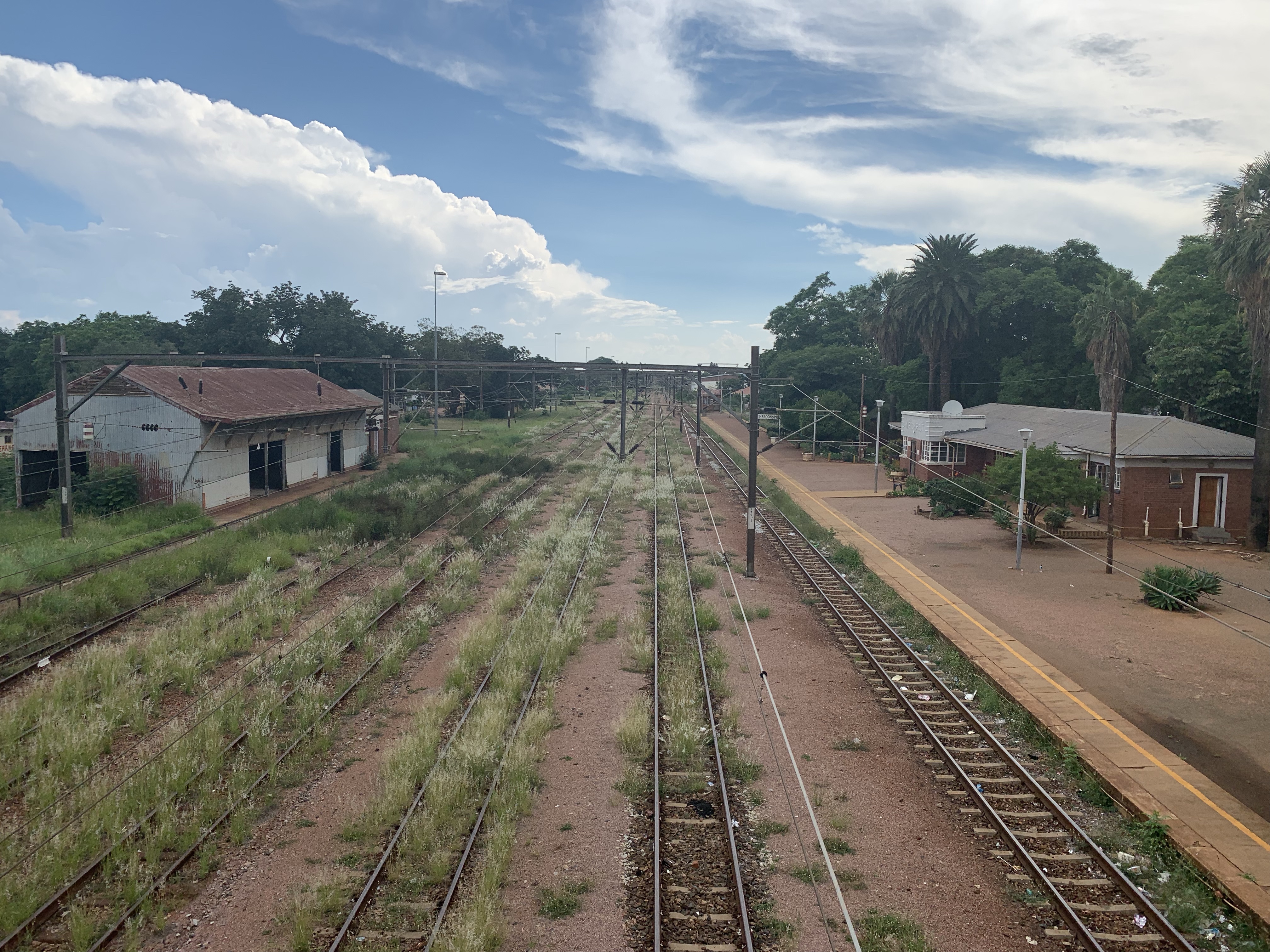
Founded in 1909, the Republic of South Africa framed the establishment of capital network industries on the basis of “what the traffic can bear”. The idea of setting prices at ‘what the traffic can bear’ is a key detail in the success of railway operations—at least before deregulation in South Africa. Let’s unpack how this fuels the underlying fragmentation revealing the lack of choice.
By deregulation I’m referring to the deregulation of road transport services and the wave of public transport growth, then private car ownership and finally followed by sprawl. This period stretches from the 1950’s and such a history persists. As noted in many cities around the world, abandoned industrial precincts are now attractive hotspots for large spaces that are socially affordable. Where are the trains leading the masses to distant desires?
At some point in the Passenger Rail Agency South Africa (PRASA) stated that it aims to expand its reach with long distance services. Some lines were even piloted, like the one between Kimberley, Mahikeng and Johannesburg. There was also a time when concessioning some lines was on the table, but the capital outlay, locomotives and market just didn’t make the case for the lines that were tabled. This was more vocally attributed to the passenger side, if I recall correctly. Anyway, my point is that as many urban areas in SA change, morph between sprawl and clustering rail services have remained unresponsive. Ga-Rankuwa station remains on the outskirts of where most points of origin. The township land-use patterns are shattering the norms because no taxi would make the trip to the station, yet its the cheapest ride to town. Most lines are expensive in terms of generalised cost. That is, including the cost of everything else that is an inconvinience about the trip—everything that consumers wish was better. Transfromation is slow and encouraging as the Africa High Speed Rail vision is truly coming to life.
In both cities and towns, there is a large market of activities: tent-setters, pulling in wagons of canvas, metal and rope to construct Workshop in Durban. Park Station has a similar vibrant morning energy. Mahikeng, Tshwane and even Cape Town sing the same tune with urine mist dancing from the corner. Or what about the trolley pushers? Young and old pushing trolleys of groceries down University Drive, or down from Choppies Center to Station Road. Carting through the sidewalk-less side of tree roots forced onto on-coming traffic and tarmac. No room, no debate, just the silence that preceeded the lower investments in rail. It was not a shock to many, because car ownership, road infrastructure construction and property development all meant more revenues for government through taxes and levies. This also meant that public sector intervention would be uncompetitive and take an oversight role—while the market is unleashed and ‘free’.
As a consequence of both a lack of the kind of debate that is found in public transport, efficient public owned freight services in SA have not been considered as a public service. This is not because of what the entity stands for, but how it presents itself to its employees, industry, youth, women, men and the elderly.
The only way a logistics revolution can happen in SA is when shopping malls stop dominating land-use and distancing themselves from public transport, parks and other amenities.
Two reasons: (1) shopping complexes that are not well woven into the fabric of society induce motor vehicle traffic and land value through parking; (2) such locations do not develop property, instead cut land uses to accommodate the induced travel demand. The same holds for class based land-uses between Alexandra and Sandton, or Dibate and-and-and Mega City in Mahikeng. But slowly shacks turn to brick homes in SA today.
Rail services are the foundation that lead the base of local production between towns, from different sources along the way. This requires a broader vision for the freight service. Goods movement is not about coal, or iron ore, or barley- it is about electricity, metal rods, and liqour. The back to rail strategy alone inspires the converted. A broader, deeper and more retrospective outlook is necessary. Trains have been symbols of displacement in Can Themba, City Johannesburg, and Hugh Masekela mystical anthems—taking families apart, breeding infidelity and single parenthood in black communities. Rail tracks separated neighbourhoods, took lives and fell part of special sports and gang initiations. Yet the story about moving goods, such as household furniture, carpentry, construction components, vehicle parts, scrap and others in modified containers is not told. The advertorial campaign bragging Transnet Limited is not sowing dreams, speaking to aspirations, nor healing wounds when it should. At one point I thought it was okay to raise the capital first then act with the resources to back the fall. For a company with a rich history, two things would do: (1) setting up manufacturing incentives for items such as furniture and long-distance movers and (2) pricing at ‘what the traffic can bear’ for the transport and partner with skills development initiatives.
Local industries will only thrive if they are lifted until they can fly, lower transport costs have shown to make countries significantly more competitive—especially in a contracting market. Fuel costs account for most of the road transport costs for any type of vehicle. More supply cuts are foreseeable, and the US dollar is not fairing well. At the same time, carbon taxes and electric trucks are emerging opportunities and threats, respectively. Logistics hubs driven by intra-regional supply and demand are the ideal, but this is not possible in all cases. Ideas, ideas, ideas. Anyway, this country needs the debate to happen—we literally need to know where our goods and hard earned industries are headed and if we can bear the consequences.

 Hlulani
Leave a comment